Why Central & Eastern Europe Is Becoming the New Global Hub for Digital & IT Services
Central & Eastern Europe is rapidly transforming into one of the world’s most attractive destinations for digital, IT, and technology services. Once seen mainly as a nearshoring alternative, the region is now becoming a strategic global hub for software development, digital marketing, data engineering, cybersecurity, and product design. With unmatched talent density, highly competitive pricing, strong cultural alignment, and growing trust from global enterprises, CEE is shaping the future of the digital economy far beyond its borders. In this article, we break down why more companies from the EU, the UK, and the U.S. are shifting their operations to Central & Eastern Europe - and why the region is quickly outpacing Western markets in innovation, export growth, and technical excellence. From talent availability to regulatory stability and global tech investment, here are the key factors that make CEE the new powerhouse of digital services.
1. The CEE Region Has One of the Largest Tech Talent Pools in Europe
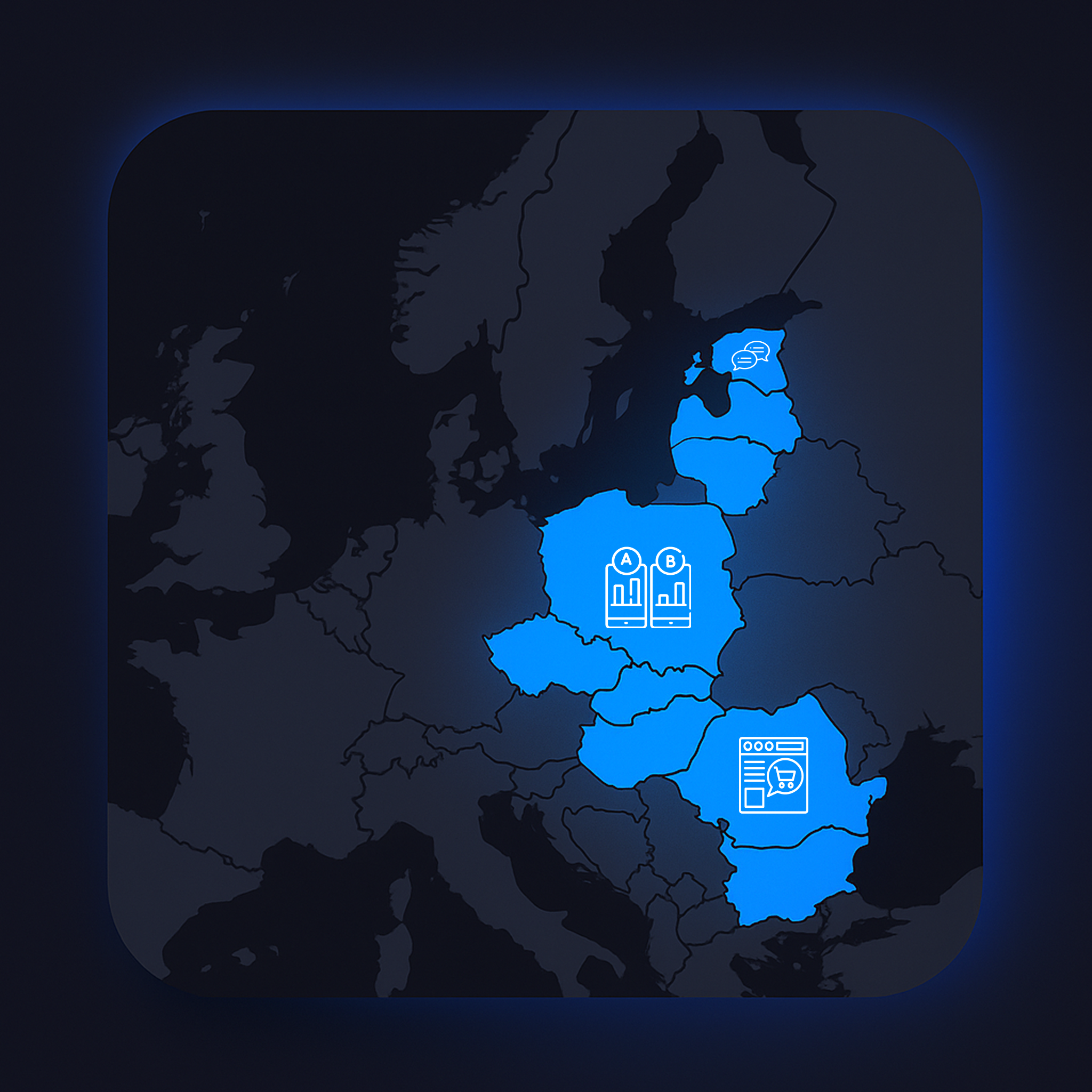
Central & Eastern Europe is home to more than 1.5 million technology specialists, making it the largest IT talent pool in the EU outside of Germany. Poland alone has over 525,000 professionals, followed by Romania (190k), Czechia (210k), and Hungary (90k). Collectively, the region surpasses the combined IT workforce of France and Spain. This enormous concentration of specialists allows CEE companies to support even the most complex global projects at scale - something that smaller markets in Western Europe simply cannot match.
2. CEE Offers a 45–65% Cost Advantage Compared to Western Europe
One of the strongest drivers of CEE’s rise is its significant cost competitiveness. Software development rates in the region range from €30 to €55 per hour, compared to €90–€120 in Germany or the Netherlands and £80–£110 in the UK. Nordic countries often exceed €140 per hour. Digital marketing and creative services follow a similar pattern: campaign management, content production, and performance marketing cost 35–55% less. This creates a unique value proposition - high skill, lower cost, without compromising quality.
3. CEE Consistently Ranked Among the World’s Top Talent Regions
Central & Eastern Europe outperforms most regions globally in technical skills, problem-solving, and engineering quality. Countries like Poland and Czechia regularly appear in the Top 10 of HackerRank, SkillValue, and TopCoder rankings. Estonia and Poland score high in the World Bank Digital Adoption Index, and the region maintains strong results in the EF English Proficiency Index, with “High Proficiency” status in multiple countries. This combination of language skills and technical excellence makes CEE a preferred destination for companies seeking reliable long-term partnerships.
4. Global Tech Giants Are Expanding Across the Region
CEE has become a critical operational base for some of the world’s largest technology and consulting companies. Google, Amazon, Intel, Cisco, IBM, SAP, Accenture, Revolut, Deloitte, UBS, Ericsson, Motorola, HP, and Samsung operate major R&D centers, analytics hubs, and engineering divisions across Poland, Romania, Czechia, and Hungary. Kraków is now the largest shared services hub in the entire European Union, hosting more than 200 service centers. The depth of global presence reinforces the region’s strategic importance and signals long-term stability.
5. Time Zone Benefits: Perfect Alignment with Europe and the U.S.
The CEE region sits in a unique time-zone sweet spot. With 1 hour difference from Germany and Scandinavia, 2 hours from the UK, and 6–7 hours overlap with the U.S. East Coast, working with CEE teams is seamless. This allows real-time communication with Europe and effective 24-hour development cycles with the U.S. Companies can structure “follow the sun” workflows without offshore delays - something Asia or LATAM can’t always provide. For global teams, CEE is simply logistically ideal.
6. Strong Cultural Fit and Western Work Ethic
CEE stands out for its strong cultural compatibility with Western businesses. Reports from Deloitte, PwC, and McKinsey highlight the region’s high alignment with European communication styles, project management standards, and business ethics. Teams are known for strong analytical thinking, ownership-driven execution, punctuality, and quality-focused delivery. Compared to Asia or Latin America, CEE’s working culture requires far less adaptation, resulting in faster onboarding and higher project efficiency.
7. Economic and Regulatory Stability Makes CEE a Safe Outsourcing Destination
Unlike many global outsourcing regions, Central & Eastern Europe benefits from EU-level regulatory frameworks, GDPR compliance, and predictable legal systems. This makes CEE significantly more stable than markets such as LATAM or India, where political or regulatory shifts can disrupt operations. The region’s integration with the European Single Market ensures consistent standards in data protection, privacy, cybersecurity, and taxation - reducing risk for international partners and investors.
8. CEE’s Digital Export Sector Is Growing Faster Than Anywhere in Europe
The region is experiencing explosive growth in digital service exports. Poland exports nearly $10 billion in IT services annually, Romania over $3.2 billion, Czechia $3.8 billion, and Hungary $2.4 billion. These numbers are rising more quickly than in Western European markets, driven by the rapid adoption of cloud engineering, cybersecurity, digital transformation, and data analytics services. CEE’s export growth outpaces the EU average, confirming the region’s expanding global footprint.
9. CEE Is Becoming “Europe’s Digital Workshop”
Just as Asia became the world’s manufacturing center decades ago, Central & Eastern Europe is becoming the digital production hub of Europe. The region offers the perfect balance of talent availability, cost efficiency, quality, and geographic proximity. This blend is rare: CEE has the scale of a continental market, the cost structure of an outsourcing region, and the cultural compatibility of Western Europe. As a result, more global companies relocate or expand operations to CEE every year.